Product Walkthrough
From Siloed to Synced: How Shared Fabric Libraries Align Global Teams and Suppliers

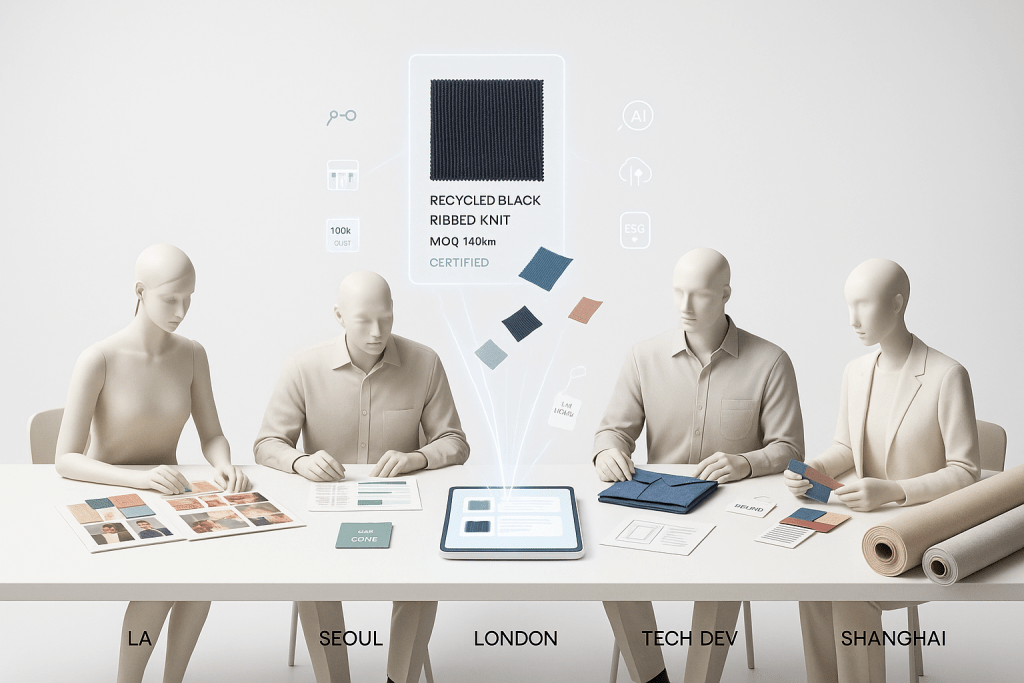
In fashion, speed wins — but only when everyone’s on the same page.
Yet for most global brands, material knowledge lives in silos.
- Designers in LA don’t know what’s in stock in Seoul.
- Sourcing in London reorders what Shanghai already sampled.
- Suppliers re-send the same swatches every season.
The result? Duplicate work, missed opportunities, and sample chaos.
It doesn’t have to be this way.
Here’s how building a centralized, shared fabric library can eliminate friction, increase reuse, and help teams make better decisions — faster.
1. Make Everything Discoverable
A shared library should surface everything — historical fabrics, new developments, in-stock items, sustainability flags, supplier specs. If a material’s been used once, it should be findable again — by anyone, anywhere.
Why it matters:
- Design teams stop reinventing the wheel.
- Sourcing stops duplicating swatches.
- Suppliers stop sending what you already have.
2. Give Every Region Access — Without Overload
Global alignment doesn’t mean one massive spreadsheet. The right platform gives teams role-specific views — so designers see visuals, sourcing sees MOQ, and tech dev sees tolerances.
Why it matters:
Japan and Germany don’t need to see the same tags — but they do need to make decisions from the same source of truth.
3. Build in AI and Tagging to Eliminate Guesswork
Use a system that auto-tags fabrics by composition, certification, color, and use case. This isn’t just for organization — it’s for speed and clarity at scale.
Why it matters:
A designer searching for “ribbed, recycled, black, stretch” should find it in seconds — not request a new round of sourcing.
4. Turn Sampling History Into Smart Suggestions
Your best fabrics are already in-house. But most teams don’t know it. A centralized library should remember what worked — and flag it when similar needs arise.
Why it matters:
Delvify users increase material reuse by up to 60% — reducing costs, waste, and sample cycles.
5. Sync Suppliers Into the Same Ecosystem
A true shared library doesn’t just connect internal teams — it connects your mills. When suppliers update inventory or develop new fabrics, you see it instantly. No email chase. No outdated decks.
Why it matters:
Approvals move faster. Risks surface earlier. Your whole supply chain operates in sync.

Ready to Centralize Your Material Library?
Delvify helps global fashion brands turn disconnected fabric libraries into one intelligent, searchable, role-tuned platform.
- AI search
- Live inventory
- Cross-brand visibility
- Real-time supplier updates
See how smarter libraries unlock faster collections — schedule your demo at delvify.ai

